Наші мандри › Форуми › Bread Journeys › Baking Sourdough Bread in a Cold Oven Without Preheating
- This topic is empty.
-
АвторЗаписи
-
-
24.11.2026 о 18:16 #15919
Do you really need to preheat your oven before baking sourdough bread? Most traditional sourdough recipes recommend preheating both the oven and the Dutch oven for at least 30–40 minutes. But what happens if you skip this step entirely and start baking sourdough in a cold oven?
I decided to try this method myself, using both a cold oven and a cold Dutch oven.
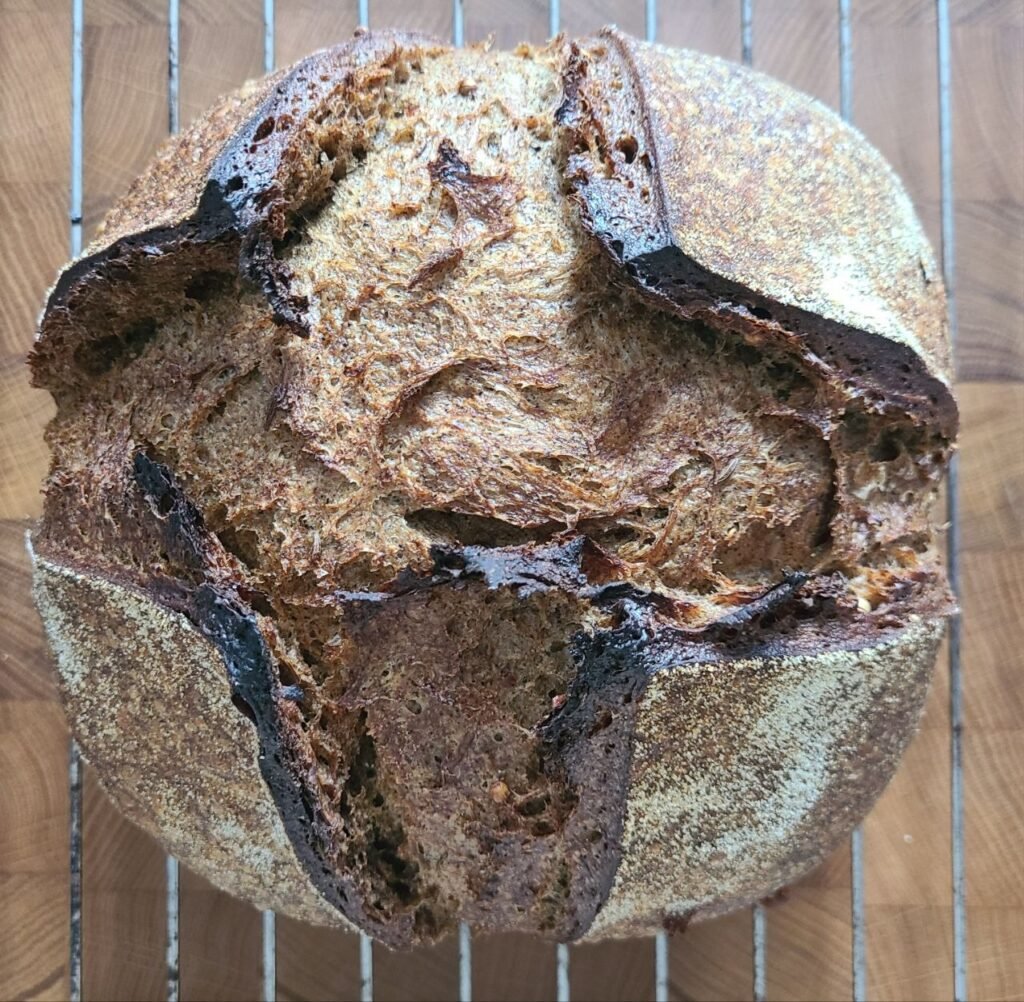
Homemade rye and wheat sourdough bread baked without preheating the oven or Dutch oven. Living in Ukraine, where electricity interruptions can make baking particularly challenging, I became interested in finding ways to reduce the time my electric oven needs to operate. Preheating an oven to a high temperature takes time and consumes electricity, so I wanted to find out whether this step was really necessary.
The results were surprisingly good.
What Is the Cold Oven Sourdough Method?
The cold oven method, also known as cold-start sourdough baking, involves placing the shaped dough into an unheated Dutch oven and transferring it into a completely cold oven.
Instead of waiting for the oven and the baking vessel to reach the desired temperature, you simply turn on the oven after placing the bread inside.
The dough, Dutch oven and oven gradually heat up together.
This approach differs significantly from the traditional sourdough baking method, where the dough is transferred into a very hot baking vessel.
My Cold Oven Sourdough Baking Experiment
For this experiment, I baked a rye and wheat sourdough bread with dried cranberries, fermented rye malt and honey.
This type of bread is particularly aromatic, with a distinctive flavour and a darker crumb than traditional white sourdough.
I placed the prepared dough into a cold Dutch oven, covered it with the lid and transferred it into the cold oven.
There was no preheating whatsoever.
The result challenged my expectations. The bread had a beautiful oven spring, a well-opened score and an attractive crust.
What surprised me most was the crumb. Despite the addition of rye flour and other ingredients, it was remarkably soft and quite airy.
The crust also developed a beautiful colour and a pleasant crispness.
My Cold Oven Sourdough Baking Schedule
I placed the shaped dough into a cold Dutch oven, covered it with the lid and put it into a completely cold oven. I then set the oven temperature to 250°C (482°F).
My electric oven took approximately 25 minutes to reach the selected temperature. During this time, the bread was already inside, gradually heating up together with the Dutch oven.
Once the oven reached 250°C (482°F), I reduced the temperature to 220°C (428°F) and continued baking for another 20 minutes with the lid on. I then removed the lid and baked the bread for a final 10 minutes at the same temperature.
Here is my complete cold-start sourdough baking schedule:
Baking stage Temperature Duration Dutch oven lid Heating up Up to 250°C (482°F) 25 minutes On Covered baking 220°C (428°F) 20 minutes On Uncovered baking 220°C (428°F) 10 minutes Off Total baking time 55 minutes The entire baking process took approximately 55 minutes, including the time required to heat the oven.
Unlike conventional sourdough baking, there was no separate preheating stage. The bread was already baking while the oven was heating up.
Keep in mind that every oven heats up differently. My electric oven takes approximately 25 minutes to reach 250°C (482°F), so you may need to adjust the baking schedule depending on your equipment.
Does Baking Sourdough in a Cold Oven Affect Oven Spring?
One of the main concerns about cold-start sourdough baking is whether the bread will rise sufficiently during baking.
Traditional methods rely on transferring the dough into a hot oven, where the sudden increase in temperature causes gases inside the dough to expand rapidly.
However, a cold start does not necessarily mean poor oven spring.
As the oven gradually heats up, the dough warms, gases expand and fermentation may briefly continue before the temperature becomes too high for yeast activity.
At the same time, the lid of the Dutch oven helps retain moisture, delaying the formation of the crust and allowing the dough to expand.
In my experiment, starting with a cold oven did not prevent the bread from rising beautifully or developing a well-opened score.
Of course, the result will also depend on dough strength, fermentation, shaping and how quickly your oven heats up.
Do You Need to Preheat a Dutch Oven for Sourdough Bread?
Based on my experience, preheating a Dutch oven is not always necessary.
Using a cold Dutch oven also makes transferring and scoring the dough much easier. There is no need to handle an extremely hot and heavy baking vessel.
This can be particularly convenient for beginner sourdough bakers.
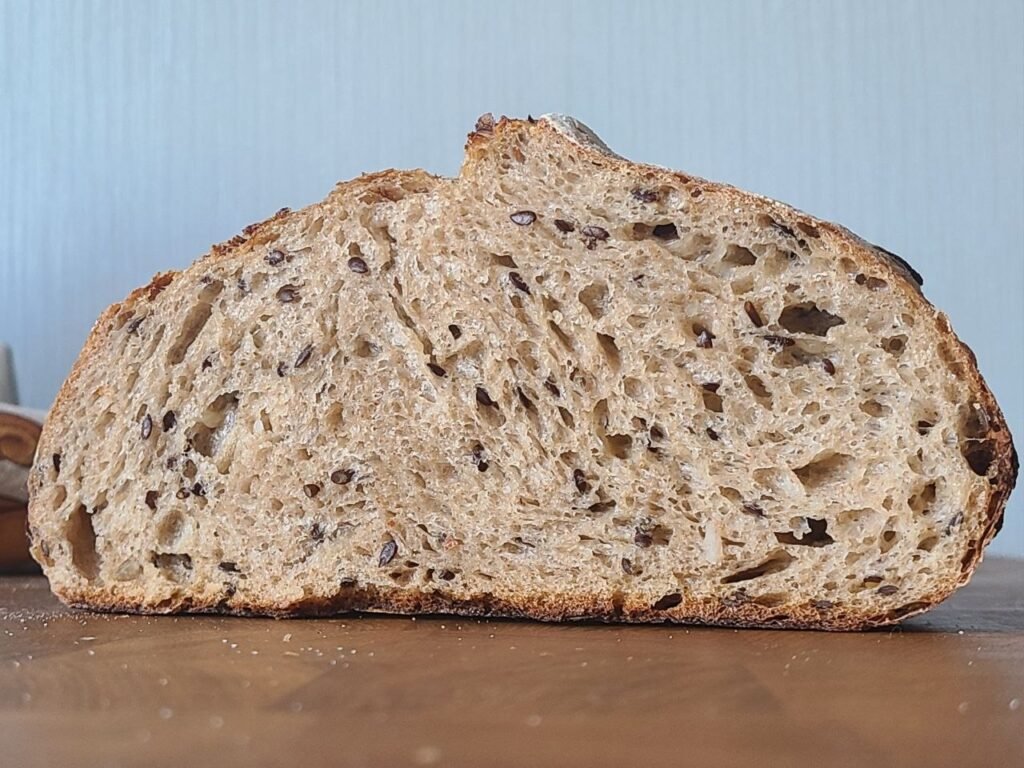
The soft and airy crumb of sourdough bread baked without oven preheating. However, different Dutch ovens and baking vessels have different heat-retention properties. Always make sure that your cookware is suitable for the baking temperatures you intend to use.
Can Cold-Start Sourdough Baking Save Electricity?
One of the reasons I wanted to experiment with this method was to avoid running my electric oven empty for 30–40 minutes before baking.
With the cold-start method, the bread is already inside the oven while it heats up.
This can potentially reduce electricity consumption, although the actual savings depend on the oven, its heating elements, insulation, selected temperature and total baking time.
I have not measured the exact electricity consumption of the two methods, so I cannot give a precise energy-saving percentage.
Nevertheless, eliminating a separate preheating stage is an interesting option for anyone looking to make their home baking routine more efficient.
Advantages and Disadvantages of Baking Sourdough in a Cold Oven
The main advantages of the cold oven method include:
- No separate oven preheating stage.
- No need to handle a preheated Dutch oven.
- Potentially lower electricity consumption.
- Easier and safer dough transfer.
- The possibility of achieving excellent oven spring and crust development.
However, there are also a few things to consider.
Ovens heat up at different speeds, so a baking schedule that works perfectly in one kitchen may need adjustments in another.
The gradual heating process may also affect different types of dough in different ways, particularly those with high hydration or weaker gluten structure.
As with sourdough fermentation, observing the results is more useful than blindly following a fixed timetable.
Is the Cold Oven Method Worth Trying?
Absolutely.
My experiment demonstrated that beautiful homemade sourdough bread can be baked without preheating either the oven or the Dutch oven.
The bread had good oven spring, a beautifully opened score, a crisp crust and a surprisingly soft crumb.
I am not suggesting that cold-start baking is universally better than traditional baking in a preheated oven. However, it is certainly a technique worth experimenting with.
If you enjoy baking sourdough bread at home, try comparing both methods using the same dough recipe. Pay attention to the loaf volume, crust, crumb structure, baking time and, if possible, electricity consumption.
You might discover that preheating your oven is not as essential as you once thought.
-
-
АвторЗаписи
- Вибачте , ви повинні увійти в систему , щоб відповісти в темі .