Наші мандри › Форуми › Bread Journeys › Sourdough Baking in Extreme Conditions: The Ukrainian Experience
- This topic is empty.
-
АвторЗаписи
-
-
24.11.2026 о 22:54 #15941
I recently came across an online discussion in which a home baker was struggling to keep a sourdough starter active because the temperature in their kitchen had dropped below 20°C (68°F).
As a home baker living in Ukraine, I couldn’t help smiling a little. The temperature in my kitchen sometimes drops to 16°C (61°F), and we currently spend between 12 and 15 hours a day without electricity. Air raid alerts, Russian missile and drone attacks, power outages and problems with heating have become part of everyday life.
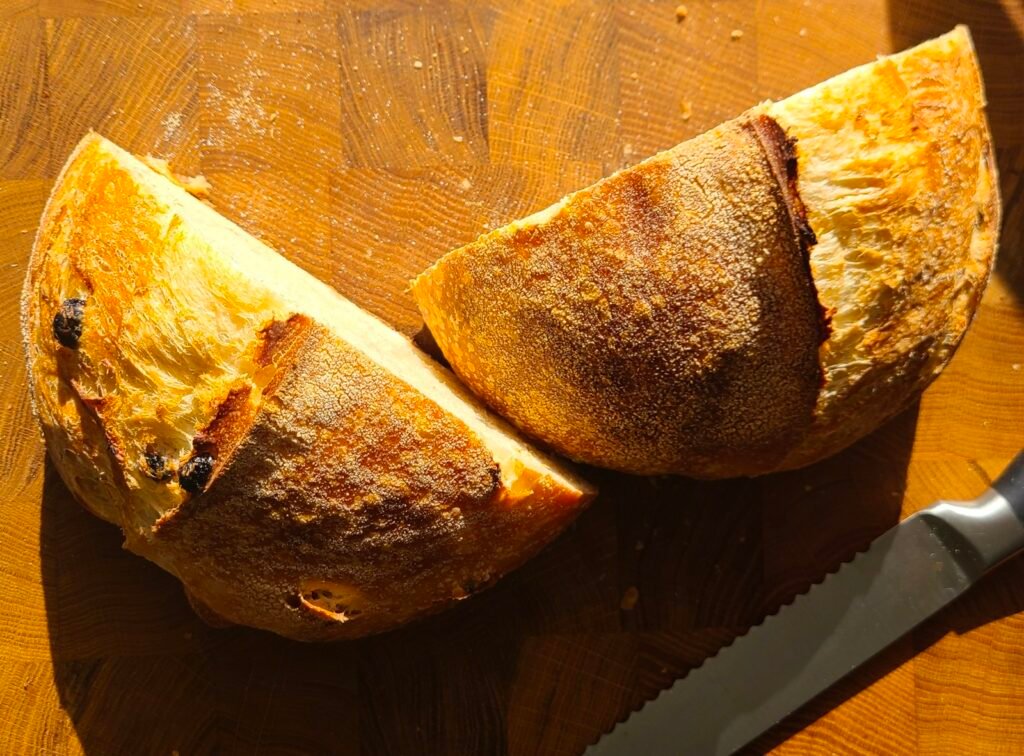
A slice of homemade sourdough bread baked in Ukraine despite low kitchen temperatures and daily power outages. And yet, my sourdough starter keeps growing, and I keep baking bread.
My biggest challenge is often not getting the dough to rise, but having electricity available when it is ready to bake.
What Is It Like to Bake Bread in Ukraine Today?
As I write this in November 2026, Ukraine is experiencing another difficult period of disruption to its energy supply. Russian attacks on energy infrastructure have caused widespread power outages and interruptions to heating and water supplies.
Where I currently live, electricity can be unavailable for 12 to 15 hours a day. Scheduled power cuts can be accompanied by emergency outages, making it difficult to plan even ordinary household activities.
For a home baker, this creates a rather unusual set of challenges.
An electric oven requires electricity. A refrigerator cannot maintain a stable temperature indefinitely without power. Heating interruptions mean that the temperature inside a home can fluctuate considerably.
Meanwhile, sourdough fermentation follows its own schedule. The microorganisms in a jar of starter have no interest in electricity schedules, air raid alerts or whether the oven will be available in a few hours.
Can a Sourdough Starter Thrive at 16°C (61°F)?
My own experience shows that a healthy, established sourdough starter can remain active even in a relatively cold kitchen.
Many sourdough guides recommend maintaining a starter at around 24–26°C (75–79°F). This is a useful temperature range for encouraging fermentation, but it does not mean that a starter cannot function at lower temperatures.
Fermentation generally becomes slower as the temperature decreases. The activity and balance of yeasts and lactic acid bacteria are also influenced by temperature, feeding practices, flour and hydration.
However, slower fermentation should not automatically be confused with a weak or unhealthy starter.
In a cold kitchen, a starter may simply need more time to reach its peak. Feeding it repeatedly according to a rigid schedule, before it has had enough time to ferment, may be counterproductive.
A mature starter, consistent feeding practices and patience can make a considerable difference.
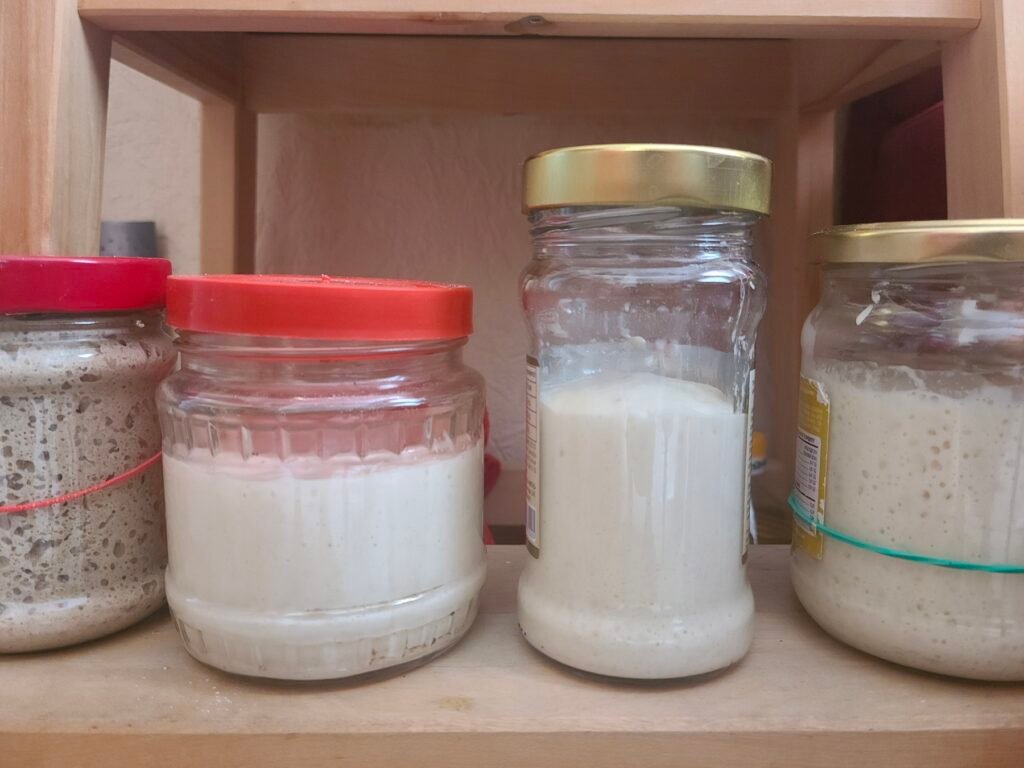
My sourdough starters remain active even at a room temperature of 16°C (61°F). Forget the Clock and Pay Attention to Your Dough
One of the most valuable lessons I have learned from baking sourdough bread in Ukraine is that fermentation cannot always be planned around a fixed timetable.
In one of my recent baking experiments, the kitchen temperature was between 16 and 18°C (61–64°F). The dough underwent approximately nine hours of bulk fermentation, followed by eleven hours of cold proofing.
Despite the relatively low room temperature, the bread turned out well.
You can find the complete recipe and fermentation schedule in my article about baking sourdough bread in a cold kitchen.
Rather than relying exclusively on the number of hours specified in a recipe, I recommend paying attention to the dough itself:
- Its increase in volume.
- The development of gas bubbles.
- Its elasticity and structure.
- How light and aerated it feels.
- Changes in its appearance throughout fermentation.
A small transparent container, often called an aliquot jar, can also be useful for monitoring the progress of bulk fermentation.
Temperature matters, but understanding how your dough behaves matters just as much.
Baking Sourdough Bread During Power Outages
When you spend more than half of the day without electricity, baking bread requires a different approach.
Traditional Dutch oven baking methods often require both the oven and the Dutch oven to be thoroughly preheated before baking. This works well, but it also requires additional time and electricity.
That is one of the reasons I experimented with baking sourdough bread in a completely cold oven.
I placed the shaped loaf inside a cold Dutch oven, covered it with a lid and turned on the oven. Once the oven reached 250°C (482°F), I reduced the temperature to 220°C (428°F) and continued baking.
The result was a loaf with good oven spring, a crisp crust and a soft, airy crumb.
The entire baking process took approximately 55 minutes, including the time required for the oven to heat up.
I have described the entire experiment, including temperatures and baking times, in my article about baking sourdough bread in a cold oven without preheating.
I have not measured the actual electricity savings, but eliminating a separate preheating stage makes this method particularly interesting when electricity is only available for limited periods.
Of course, no loaf of bread is worth risking your safety. During an air raid alert, personal safety must come before baking.
What Baking in Difficult Conditions Has Taught Me
Social media is full of beautifully equipped kitchens, temperature-controlled fermentation chambers, expensive mixers and sophisticated baking equipment.
These things can certainly make sourdough baking easier. But they are not essential to making good bread.
A healthy starter, flour, water, salt and an understanding of fermentation remain the foundations of sourdough baking.
Living in Ukraine has given me a rather different perspective on what constitutes difficult baking conditions.
A cold kitchen is something I can work with. A longer fermentation is something I can adjust to. A power outage, on the other hand, can change the entire baking plan.
Sometimes, the most important piece of information for a Ukrainian home baker is not the protein content of the flour or the hydration of the dough, but when the electricity is expected to return.
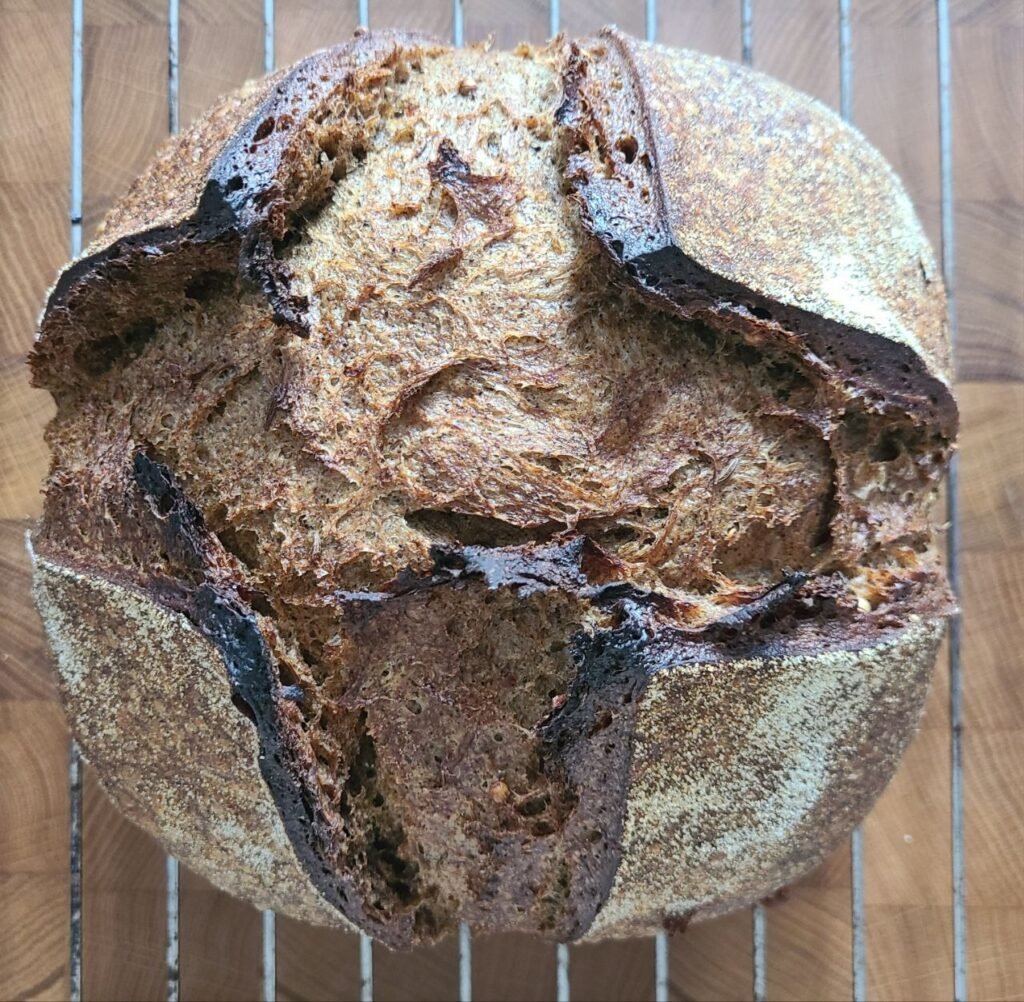
A homemade sourdough loaf with a deeply browned crust and beautifully opened scores. This does not mean that everyone should bake in difficult conditions, or that the hardships of war should be romanticised.
It simply means that even when everyday life becomes unpredictable, there is something comforting about being able to make a loaf of bread with your own hands.
And if your kitchen temperature has dropped below 20°C (68°F), don’t give up on your sourdough starter just yet.
Give it a little more time.
My sourdough starter is doing just fine at 16°C (61°F), here in Ukraine.
-
-
АвторЗаписи
- Вибачте , ви повинні увійти в систему , щоб відповісти в темі .